.png)
The Coming Creative Collapse? Why AI Art Is a Dire Threat to the Future of Human Creativity
- Oct 7, 2025
- 7 min read
For decades, the creative industry has been a sanctuary for expressive minds — a place where imagination, emotion, culture, and craftsmanship merge into illustrations, comics, films, character designs, writing, and countless other mediums.

Why AI Art Is a Dire Threat to the Future of Human Creativity
It’s where the weird, the whimsical, the bold, and the personal are given a home. But in the last few years, the ground beneath this world has begun to crack.
AI-generated art — once a novelty, now a disruptive force — is reshaping the landscape faster than anyone anticipated.
What some hailed as a fun new tool is rapidly becoming an industrial machine capable of mass-producing imitation creativity at a scale no human could match.
And the consequences are piling up.
This isn’t just about technology advancing. This is about what happens when a creative industry built on human skill, emotion, and lived experience collides with an algorithm trained on millions of stolen works.
This is an opinion article — yes — but it’s also a warning.
Below, let’s explore the dire effects AI art is already having on the creative industry, and why artists, studios, clients, and fans should care right now, before the damage becomes irreversible.
1. The Devaluation of Human Skill
Artists train for years — sometimes decades — honing a craft that demands discipline, patience, curiosity, and resilience. Drawing, painting, character design, composition, color theory, visual storytelling: these are not simply “outputs.”
They are skills shaped by lived experience, emotional context, and individual voice.
But AI collapses all that into minutes.
Suddenly anyone with a keyboard can type “cute cat wizard in watercolor style” and out comes something that looks like art created by a professional — even if it’s structurally flawed, ethically compromised, or visually hollow.
The dangerous result:
Clients begin to assume artistic skill is easy, fast, and cheap.
Why pay $300 for a cartoon illustration when an AI tool can spit out ten options instantly?
Why hire a character designer when you can mash together styles of your favorite ten artists with a single prompt? This shift devalues the years artists have invested into learning anatomy, lighting, narrative structure, style development, and creative problem-solving.
We have reached the point where:
Talent is mistaken for automation.
Craft is mistaken for a preset.
Experience is mistaken for a prompt.
This cultural devaluation is already affecting pricing, expectations, and respect for the creative profession as a whole.
2. A Flooded Marketplace No Human Can Compete With
Before AI art, the creative marketplace — while competitive — was at least human-paced.
Artists had to create work one piece at a time. A comic page took hours.
A character lineup took days. A polished poster took weeks. The marketplace reflected that. But AI has no such limitations. It can generate thousands of images per day per user.
Multiply that by millions of users.
Now add in low-effort marketplaces that accept AI-generated images with no regulation, no disclosure, and no barrier to entry. The result?
A tsunami of AI-made content flooding platforms like Etsy, Redbubble, TeePublic, ArtStation, Instagram, and even stock image websites.
This flood does three critical things:
1. It buries real artists under waves of automated content.
Visibility drops. Search ranking drops. Discoverability dies. Human artists, already struggling, become impossible to find.
2. It saturates trends instantly.
A style boom that once may have lasted months now burns out in days. AI copies every popular trend instantly, killing originality and suffocating creative individuality.
3. It drives down perceived value.
Thousands of AI users pricing “art” at $2 or offering “custom portraits” for $5 distort the marketplace. Real artists cannot survive in a race to the bottom. This isn’t competition. It’s drowning.
3. The Ethical Theft at the Core of AI Art
This is the part too many people ignore because it’s uncomfortable:
AI art is powered by massive data sets built on stolen, scraped, unlicensed human artwork.
The imagery fed into these models came from:
Portfolios
Personal websites
Art blogs
Webcomics
Illustration marketplaces
Social media (especially Instagram and Pinterest)
Training corpuses built without permission
AI systems learned by copying millions of artists — living and dead — with zero consent, zero compensation, and zero credit. This is not inspiration. This is not fair use.
This is industrial-scale plagiarism disguised as innovation.
Even worse, some AI companies admire themselves for producing “new creative output,” while their models spit out images in the unmistakable style of specific artists — sometimes with their signatures distorted at the bottom.
Imagine stealing a carpenter’s tools, copying their techniques, and selling cheaper furniture faster than they ever could… then telling them they should “adapt.”
That is exactly what AI art is doing to artists right now.
4. Loss of Creative Career Pathways
The creative industry — animation, comics, gaming, publishing, advertising — depends on entry-level and mid-level artists to develop the next generation of illustrators, designers, directors, and storytellers.
But when companies can automate these early jobs, the entire ladder collapses.
Here are the jobs that AI threatens first:
Concept artists
Background painters
Thumbnail artists
Storyboard assistants
Visual development interns
Book cover illustrators
T-shirt graphic designers
Marketing illustrators
Character design freelancers
Indie comic artists
These roles once served as stepping stones — training grounds where artists learn, grow, and eventually lead creative teams.
Replace them with AI, and you don’t just eliminate jobs.
You eliminate the pipeline that creates future industry legends.
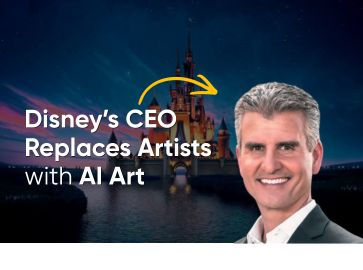
Imagine Pixar, Disney, Blizzard, Nickelodeon, or any major studio without human artists learning and growing behind the scenes. Creative ecosystems collapse when new talent can no longer enter or survive.
We don’t lose just jobs.
We lose generations of artistic voices.
5. Cultural Homogenization: When All Art Starts Looking the Same
One of the greatest strengths of human creativity is diversity — personal styles shaped by life experiences, cultural background, physical environments, and emotional journeys.
But AI, even when trained on millions of images, tends to produce homogenized aesthetics:
The same soft lighting
The same overly smoothed anatomy
The same glossy texture
The same composition tropes
The same “beautiful but empty” visual polish
This happens because AI doesn’t understand meaning — it understands statistical likelihood. Whatever appears most frequently in the training data becomes its default.
Over time, this creates:
Less stylistic variety
Fewer artistic risks
Fewer cultural voices
Less personality in creative work
If left unchecked, AI will turn the visual world into a blur of sameness — predictable, bland, mass-produced imagery that lacks individuality.
The more AI dominates, the more originality dies.
6. Economic Collapse for Mid-Level Artists
The global creative industry depends on a vast, diverse ecosystem of artists — not just the superstars at the top. Mid-level artists, freelancers, and part-time illustrators form the backbone of:
Children’s books
Indie games
Webcomics
Marketing departments
Small-brand merchandise
YouTube channels
Educational content
Local businesses
Event posters
Small publishing houses
These clients are already turning to AI to “save money,” unaware that they are simultaneously:
Destroying the talent pool they depend on
Devaluing custom art
Jeopardizing long-term creative sustainability
When mid-level artists disappear, small businesses lose the human collaborators who bring personality, charm, and emotional resonance to their branding.
The entire ecosystem becomes cheaper, flatter, and less human.
7. Emotional and Psychological Damage to Artists
Beyond the financial consequences, AI art inflicts a profound emotional toll on human creators.
Many artists report feeling:
Demoralized
Invalidated
Outpaced
Impostor syndrome amplified
Fearful of career extinction
Hopeless about the future of art
Imagine dedicating your life to a craft — only to be told a machine can do it “faster and cheaper.”
Imagine seeing your style copied by AI users generating thousands of images with your aesthetic.
Imagine watching clients who once valued your creativity now treat you as optional.
AI threatens not just livelihoods but identities.
8. The Danger to Storytelling and Human Culture
Art is not decoration.
Art is communication — a record of human experience, emotion, cultural memory, and imagination. It is how we process grief, celebrate joy, explore identity, and understand one another. AI cannot feel.
It cannot empathize. It cannot suffer, hope, love, regret, dream, or grow. Yet AI has begun replacing the very thing that expresses these human truths.
If we allow AI-generated content to dominate storytelling — comics, film boards, book covers, animations, or character designs — we risk turning human culture into an echo chamber of recycled visual noise devoid of emotional authenticity.
Human stories require human voices.
9. The Myth That AI Is “Just a Tool”
Defenders of AI art often repeat the phrase: “AI is just a tool — artists should adapt.”
But this is a misunderstanding.
A tool:
Extends human ability
Requires human direction
Is ethically neutral
Supports craft
AI art systems:
Replace human ability
Generate art autonomously
Are built on stolen data
Undermine craft
A pencil is a tool. A camera is a tool. AI is a competitor — one trained on the labor of the people it now threatens to replace. That is not a tool.
That is an industry disruptor with the potential to erase the field it claims to “assist.”
10. What Happens If We Do Nothing?
If the trajectory continues unchecked, the creative industry by 2030 could look like this:
Drastically fewer working illustrators
Studios hiring one artist + ten AI tools instead of teams
The collapse of freelance marketplaces
A world where originality is rare and automation is the norm
Cultural narratives shaped by algorithms, not experiences
A generation of young artists who give up before they begin
This is not dramatic. This is realistic. We are already watching early symptoms.
So What Can Artists and Clients Do?
Even though the situation is serious, all is not lost. Human creativity still has immense value — but protecting it requires action.
1. Support human artists directly.
Commission them. Credit them. Share their work.
2. Advocate for ethical AI legislation.
We need laws protecting artists’ intellectual property and prohibiting unauthorized training.
3. Educate clients.
Most clients genuinely do not understand the harm. Help them see the long-term consequences.
4. Celebrate human-made work.
Not “AI-assisted.” Not “prompt engineered.” Human-made.
5. Build communities that uplift real creators.
Artists survive best when they support each other.
Conclusion: Creativity Is Human — And Worth Fighting For
Why AI Art Is a Dire Threat to the Future of Human Creativity.
We are standing at a crossroads. AI can either become a supportive tool guided ethically and used responsibly…or it can bulldoze the creative industry into a wasteland of automated sameness.
The dire effects are not hypothetical. They are happening now — in lost jobs, stolen art, eroded value, and a marketplace drowning in machine-made content.
Human creativity is irreplaceable. It is emotional, imperfect, bold, personal, and deeply alive.
And if we want a future where art still has heart, soul, and meaning, then artists, clients, studios, and
audiences must protect it — before the damage becomes irreversible.



.jpg)


Comments