%20(2475%20x%201650%20px)%20(7)_edited.png)


New Report Confirms 97% of Baywatch Lifeguards Had No Actual Lifesaving Skills
- Feb 4, 2025
- 3 min read
Updated: 1 day ago
by Matthew R. Paden
Friday, March 21 2025
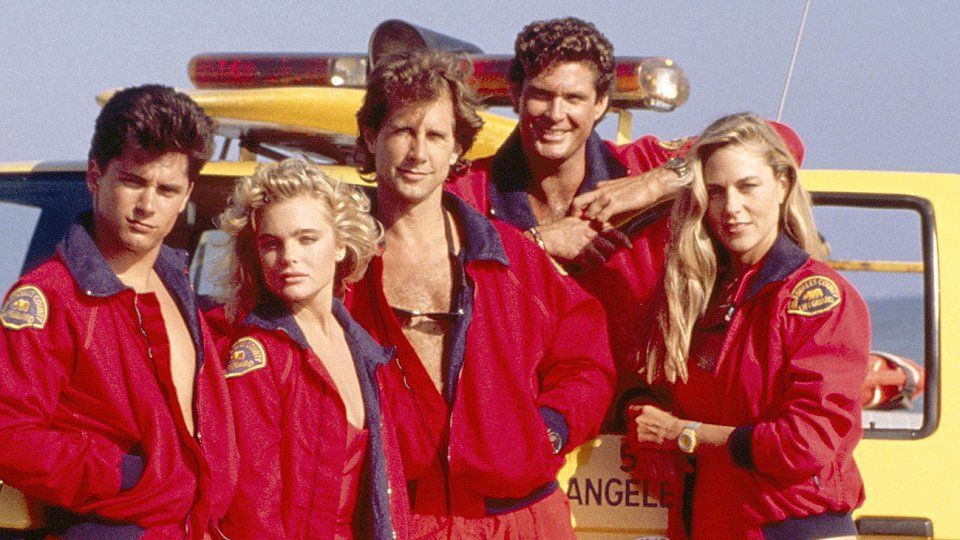
Baywatch Lifeguards
LOS ANGELES — In a revelation that has stunned the lifeguarding community, a new study confirms that nearly all of the lifeguards featured on the hit 1990s show Baywatch were, in fact, completely unqualified to perform actual rescues.
The study, conducted by the Institute for Television Realism, found that while baywatch lifeguards excelled in slow-motion running, dramatic ocean stares, and applying baby oil in record time, their ability to perform CPR, recognize riptides, or even swim with proper technique was “deeply questionable at best.”
“This is deeply concerning,” said lead researcher Dr. Linda Matthews. “For an elite lifeguard unit that patrolled the busiest beaches in California, their primary skill seemed to be adjusting their swimsuits mid-stride.”
More Running, Less Saving
The study analyzed over 200 episodes of Baywatch and found that, on average, bay watch lifeguards spent 48% of their screen time running in slow motion, 35% engaged in non-lifeguard-related drama, and only 17% actually attempting rescues.
Even more shocking, of that 17%, roughly half of their rescue attempts ended with another lifeguard dramatically jumping in to “assist” before either of them reached the drowning victim.
“Often, it seemed like lifeguards were more concerned with striking heroic poses than actually reaching the struggling swimmer,” Dr. Matthews explained. “In several cases, the supposed ‘victim’ was forced to hold their breath longer just to wait for the camera to finish its dramatic zoom-in on David Hasselhoff’s concerned expression.”
Lack of Real Lifeguarding Skills
Among the most damning findings:
CPR Technique: Researchers found that Baywatch lifeguards attempted CPR an estimated 72 times over the show’s run. However, in 68 cases, the technique used would have “almost certainly” resulted in further injury or near-instant cardiac arrest.
Use of Floatation Devices: The show’s signature red rescue can was, in reality, used as a dramatic accessory rather than an actual lifesaving tool. “At best, it was used to look cool while running,” Matthews noted. “At worst, it was abandoned altogether as soon as the lifeguard reached the water.”
Helicopter Overuse: Rather than using basic lifeguard skills, Baywatch relied on helicopters for over 60% of ocean rescues. “Either the production team had a helicopter sponsorship deal, or they truly believed that every struggling swimmer needed an aerial response unit,” said one expert.
The Hoff Factor
David Hasselhoff, who portrayed lead lifeguard Mitch Buchannon, has been heavily scrutinized in the study’s findings. While unquestionably the most experienced Baywatch lifeguard (in terms of sheer years spent on the beach looking concerned), the report suggests that his primary function was delivering dramatic monologues about responsibility, rather than actively preventing drownings.
The Hoff’s role was also found to be “75% chest exposure, 20% dramatic diving, and 5% actual rescue attempts.”
“I don’t think anyone really expected Mitch Buchannon to perform CPR,” said former lifeguard and Baywatch superfan Greg Phillips. “But at the very least, we assumed he’d actually swim in a straight line instead of taking the longest possible route to a drowning victim for maximum dramatic effect.”
The Swimsuit Dilemma
The study also raised concerns about Baywatch’s uniform policies.
“The high-cut swimsuits worn by female lifeguards and impossibly tight trunks worn by male lifeguards appear to have been specifically designed for impracticality,” said Dr. Matthews. “Multiple recorded rescues had lifeguards visibly adjusting their attire mid-rescue, which is an absolute death sentence in a real-world drowning situation.”
In one particularly damning moment, the study found that lifeguards spent more time on elaborate beach volleyball montages than in actual lifeguard training.
A Lasting (If Confusing) Legacy
Despite these findings, Baywatch remains one of the most beloved shows of the 1990s, leading to an influx of aspiring lifeguards who mistakenly believed that saving lives involved flawless hair, impeccable abs, and a good wind machine.
Some lifeguard organizations have even credited Baywatch with increasing interest in beach patrol jobs, though many recruits were “immediately disillusioned” upon learning that the job required actual swimming.
“I signed up to be a lifeguard because I wanted to run in slow motion down the beach,” said one disappointed recruit. “Turns out, you just sit in a chair and yell at kids with pool noodles. Total scam.”
Moving Forward
In response to the study, Baywatch producers have issued a statement defending the show’s legacy:
“While we acknowledge the lack of traditional lifeguarding techniques, Baywatch did achieve something far more important: It made lifeguarding look incredibly sexy. And in the end, isn’t that what really matters?”
Meanwhile, the U.S. Lifeguard Association is urging people not to use Baywatch as a reference for actual lifesaving procedures. “Please,” one spokesperson pleaded, “stop posing dramatically before rescuing people.”
At press time, a group of former Baywatch cast members were seen running in slow motion toward a beach bonfire, for no apparent reason.


.jpg)
Comments